Archives For November 30, 1999
Okay, it isn’t so much “world-famous” as much as it is famous amongst our family and friends. But still, that’s quite a feat. We have very discriminating peers. They would tell us if it sucked (probably).
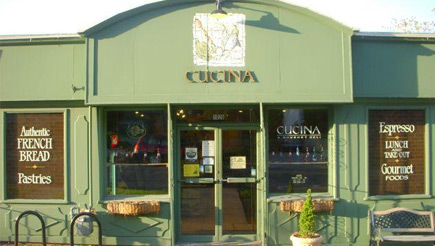
This is the secret of The Avenues. We went to Cucina on a whim and were blown away. Although, we made the mistake of ordering side dishes with our main course– the portions are huge and these photos don’t really do them justice. Everything was delicious, the service was lightning fast (although we were there for a late lunch, not peak hours), and we have zero complaints.
The winner of the day was a ham, cheese, and squash pie in a flaky, golden crust. This was to die for, though it was a special and not necessarily always on the menu. When you walk in, there’s a counter gleaming with all sorts of beautiful dishes made daily, and these rotate.
We take every opportunity possible to incorporate a cheese-breadcrumb crust into a meal. For those of you who don’t know us, that statement might sound hyperbolic. But like Ron Swanson’s famous bacon and eggs bit, this is literal. One of our many breadcrumb-cheese crusted dishes is chicken parmesan. It’s a chicken breast, dipped in egg, then dipped in a breadcrumb-fresh grated parmesan mixture, and then, yes, pan-fried to deliciousness* in olive oil (or EVOO as one annoying little brunette with weird boobs calls it on Food Network).
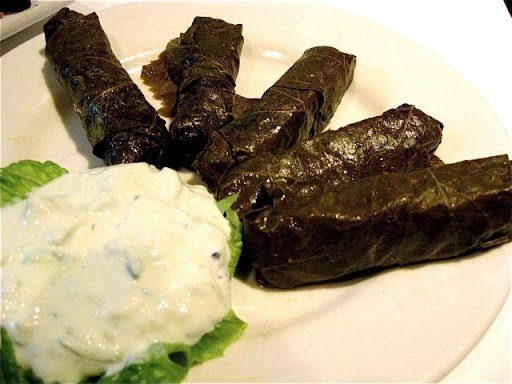
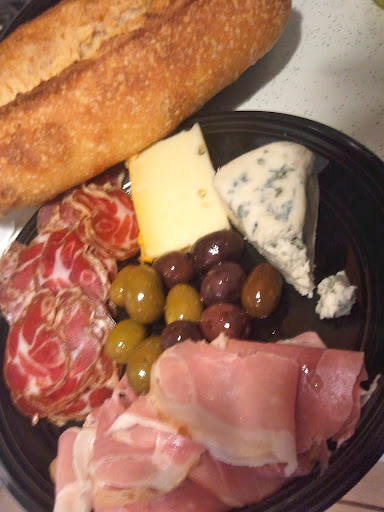
We cheated on this dinner and just used an inexpensive, pre-made spaghetti sauce. And don’t turn up your nose; it was awesome. We added some fresh minced garlic to the sauce, boiled some spaghetti noodles, tossed a baguette in the oven, added some feta-stuffed olives from Harmons (OMG YUM), and called it good. Really good.

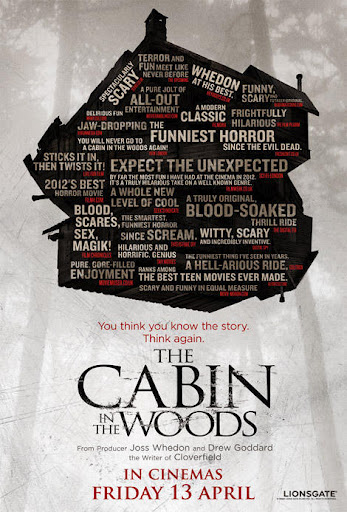
At this point, it’s no secret that I’m a sucker for horror movies, but this one takes the cake. This is one of the funnest horror movies I’ve ever seen (yes, I might even like it more than Jennifer’s Body, which is a statement I haven’t yet uttered about a horror film until now). Not only was The Cabin in the Woods a celebration of all things horror, it was clever, shocking, and different. It gushed (pun intended?) with originality, a rarity in contemporary horror.
In the era of the postmodern smarty-pants viewer, well versed in genre constructions, we are in the age of meta-horror. It seems that every film since Scream has tried to point out its own constructedness, paying homage to the horror genre and referencing the horror conventions that have come before. The Cabin in the Woods (we’re talking the 2012 version here, of course) forces this agenda to a new level, pushing the purpose, commentary, and conversation of contemporary horror. This isn’t self-referentiality for the sake of street cred– this is self-referentiality that propels itself and the genre to something new, one of the markers of a great work.
And in case you were wondering, yes Joss Whedon is an incredibly talented writer who has grown a lot since Buffy and Angel. Moments of serious horror and gore are undercut with witty and thought-provoking humor that fits into a story that pushes its premise to its limits. I can’t wait to see what this guy does with The Avengers. To all you nervous, Whedon nay-sayers who worried if he’d be able to shine on the silver screen, I just want to give you an inelegant and irritating (but well deserved) “I told ya so.”
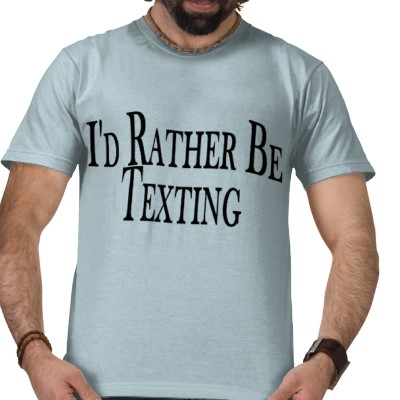
Today my dad handed me an article he had torn out of Newsweek in September and said, “This made me think of you, so I saved it.” As I read the title, I groaned. The article was written by a professor of history at Harvard (and yes, I deign to disagree with a Harvard professor), entitled “Texting Makes U Stupid.”
From the title alone, I had the article outlined in my head, point by point, before I read the rest of his words. Bring in stats about how much teenagers tweet. Make snide quips about the inanity of the text message (because nothing important or beautiful or poetic or smart could possibly fit into the format of a text message). Queue stats, mourning the loss of literacy in the United States. Boldly state at the end of the article that we should read more! Of course the author states this to an audience currently reading Newsweek, patting themselves on the back for dodging the scourge of the text message, understanding the value of reading, and being from a generation who understands the elusive “good ol’ days.”
It’s disconcerting that a professor from Harvard would write an article falling into post hoc fallacies and blaming something as complex as our illiteracy epidemic on the invention of the text message. When the novel itself first came to be (yes, it’s a fairly new invention that didn’t emerge until the Victorian period), people thought the same thing. A novel was thought to be a waste of time, an unintelligent hobby. And later, with the widespread popularity of television, people worried that the novel would die. And yet we have a professor of history crying that the sky is falling when teens are texting.
I do not think that falling literacy rates are great. What I do think is great: teens write more now every day than they ever have in the past. Kids write emails, text messages, tweets, and facebook statuses. Are they always spelled correctly? No, but it means that several times a day, they’re thinking about writing. They’re stringing words and sentences together and thinking about how to express ideas. They’re thinking about concision, clarity, and audience. They’re thinking about communication and its value. I don’t think any of these things are bad, and I don’t think that’s what’s to blame for a falling interest in reading. I think it’s an easy answer and a scapegoat.
It’s silly, unfair, and archaic to define reading a novel as the only kind of reading that merits worth. Teens and college students now have information, news, and updates at their fingertips, which adds up to quite a bit of reading. Is all of it good? No, but neither are all novels. Yes, teach our kids to be smart. Teach our kids to appreciate art and words and nuances of meaning. But don’t sit around telling kids that texting is bad or leading them to a disinterest of the world around them, because that just validates the phrase they’ll spout back at you, which is “you just don’t get it.”
P.S. I teach Writing and Rhetoric to college freshmen. I’m very much concerned about the reading and writing habits of our youth. I just don’t agree with the leaps of cause and effect in this article.
Behold, my new favorite web comic: False Positive. In this short-story compilation, influenced by the likes of Hitchcock and The Twilight Zone, the stories never turn out the way you expect. The writing is fun and engaging and the artwork is downright gorgeous. Plus, the comments always buzz with interesting guesses about where the stories are going (almost always wrong, but still fun). Check it out: http://www.falsepositivecomic.com/
I sat in the theater, long after the credits had ended, long after several pubescent theater workers grumbled while shuffling around me. I had never been so shocked into silence after watching a film. I remained thoughtful and quiet walking out of the theater and to the car and throughout the car ride home (much to the worry of my boyfriend who was with me). Okay, I wasn’t completely silent. Right after the film ended I looked at my boyfriend and said, “Holy shit,” but that was it.
Drive is the kind of film that doesn’t come around often. It’s a film that reminds you of the potential artfulness of filmmaking. Actually, it’s a film that reminds you that humans are capable of making things that are so incredibly beautiful that they seem to transcend the physical space that they inhabit. As cheesy as it sounds, I left that theater with a renewed hope in the creative powers of man, and I don’t mean that as hyperbole. I don’t have a single negative thing to say about this film—and I can’t recall any other time in my life-long career as film critic (and critic of all things, in general) that I’ve uttered such a phrase.
This film was exceptional. The acting, writing, editing, cinematography, music, pacing—everything—was impeccable. That’s not to say it was safe. As Guillermo del Toro said of the film at Comic-Con, this is balls-to-the-wall filmmaking. It’s gutsy and experimental in the way it’s put together, and I’ve never seen anything like it. It’s rare to see something so fresh and new that actually works as a harmonious whole.
I now have an enormous amount of respect for Nicolas Winding Refn, who rightfully claimed best director at Cannes for the film, and also for Ryan Gosling (turns out he’s a total badass—could’ve fooled me). In fact, as I learned at a Comic-Con panel, it was Gosling who had the rights to the book Drive is based on, and it was Gosling who sought out Refn to be the director. After a horrible first meeting over lunch, the two bonded through an REO Speedwagon song in Gosling’s car and realized they shared the same vision for the film, as Refn broke down into sobs and they discussed their vision of a character who cannot feel real emotion unless he’s driving (and listening to ’80s pop). Crazy, right? The stuff of fairy tales.
At Comic-Con, I was stunned by the footage that was shown, and I was equally stunned by Guillermo del Toro’s gushing over Refn, but being the cynic that I am, I worried that they had showed us the best scenes. How could every scene in the film live up to the scenes that they had shown us? Oh, my friends, how wrong I was. The scenes shown at Comic-Con were even better in the context of the film, and those scenes were not the exception to the rule. Every scene was phenomenal.
For those of you who were fooled by the marketing ploy and believe this to be Fast and Furious 6, it’s not. In fact, I heard many disappointed movie-goers leave the theater with complaints: “That was so slow and boring” and “That did not have enough action.” Yeah, I’m sorry you guys were tricked into seeing a brilliant film.