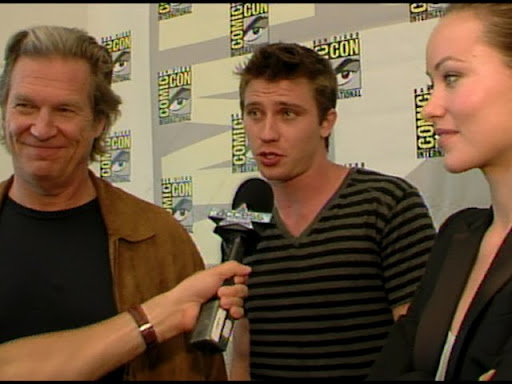
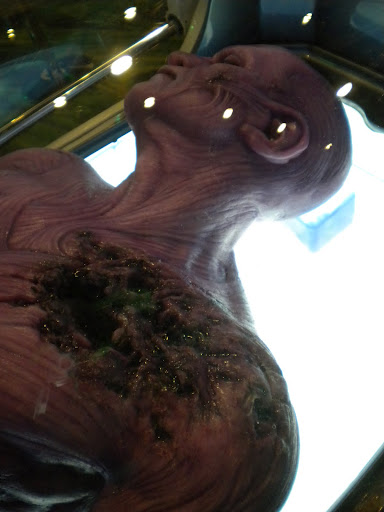
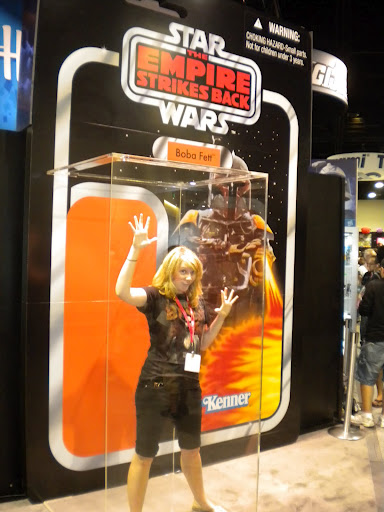
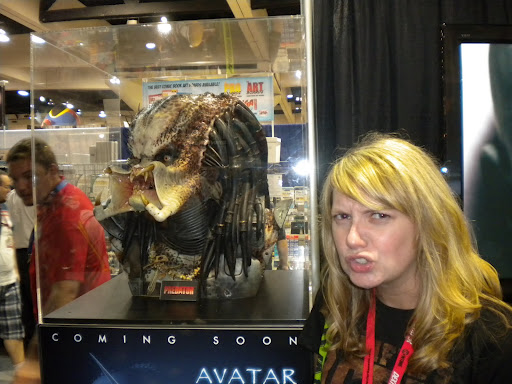
So I’ve been a bad girl, and I didn’t update my blog yesterday, which means I’m bursting to get tons of cool stuff off my chest. The last two days have been insane. Let’s start with what blew my mind the most.
Archives For November 30, 1999
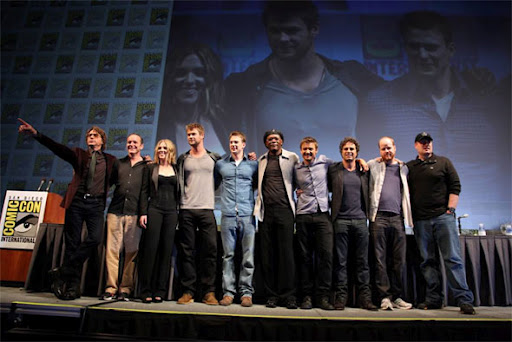
So here’s the scoop on what happened at Comic-Con today. I’m not gonna lie, some pretty freaking awesome stuff went down.
Jaw-dropping moment today: Guillermo del Toro announced he’ll be directing a remake of Disney’s Haunted Mansion. He beamed as he made his announcement and explained that he has an entire room in his house devoted to the spooky Disneyland ride. He says this film will not be a comedy; it will be scary but fun. He also assured the crowd, “Don’t worry, we have not been returning Eddie Murphy’s calls.” I love Guillermo del Toro.
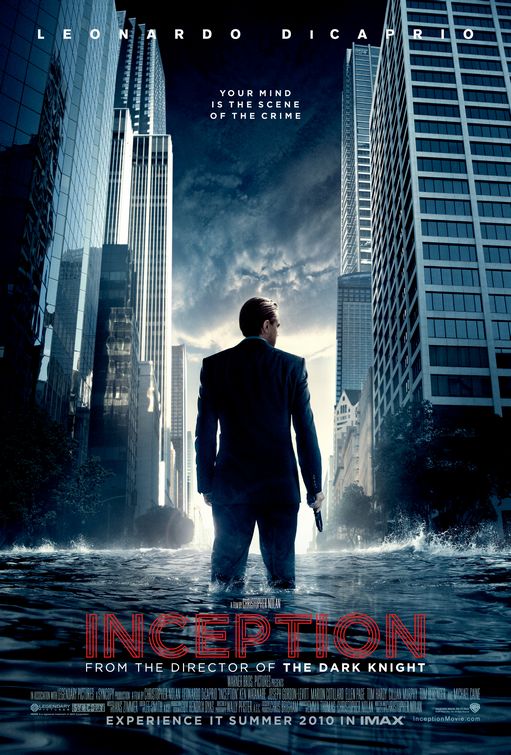
I’m gonna cut to the chase—the visuals had me drooling the entire time. It wasn’t too over-the-top or incohesive (like a Terry Gilliam mess) and it wasn’t what the layman labels “creative” (like M. Night Shyamalan or Tim Burton). It was actually different and interesting.
Between the beautiful shots of people fighting while floating and cities folding into themselves, there were certain inconsistencies within this world that did not make sense to me. But that goes with the territory when you see a film like this, and it’s almost unavoidable. You just have to set all your logic on the shelf before the film begins. Luckily, the story and the visuals will soothe your logic-less brain. And after walking away, don’t bother wasting time pondering the film’s contradictions or lapses in logic.
I recommend a one-time must-see. It’s the film everyone’s talking about, and you’ll be shunned from social circles and awkwardly ostracized at parties if you don’t see it. But you don’t have to succumb to peer pressure and pretend you’re going to see it twice.
Putting aside the awesome actors, there’s only one word to describe the plot: fun.
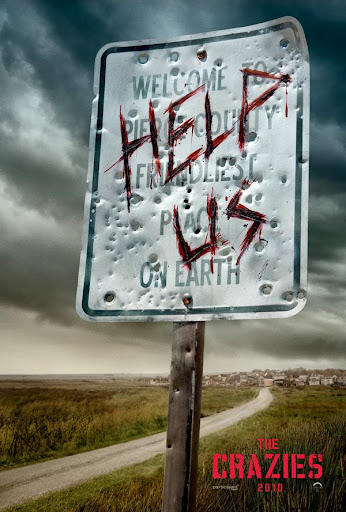
Before you see this film, the less you know about the plot, the better. I sat down in the theater armed only with the expectation that I would see crazy people, and I walked away from the experience pleased with the structure, pacing, and style in which the film unveiled the plot. So I’m trying to refrain from spoiling anything, in hopes that you’ll see this better-than-expected refreshment.
The Crazies is a remake of George A. Romero’s forgotten 1973 film by the same name. (I’ve never seen the original. In fact, I’d never heard of the original until recently, but George A. Romero’s Dawn of the Dead is one of my most cherished DVDs.) I sensed some of George A. Romero’s playfulness shining through in The Crazies, but for the most part, the film took itself pretty seriously. Sure, this film fulfills a lot of stereotypes (the far-fetched scenarios, some predictable deaths, the hopeless romantics), but it is also much more sophisticated than most films in its genre.
From the very first scene, I was hooked by the storytelling. Not only did the film waste no time establishing tension, but from the beginning the characters were fleshed out and more multi-dimensional than most horror representations. As the plot progressed, the storytelling only became more refined—clean, intelligent, satisfying. When I wished for a character to do something smart, it was like they heard my thoughts and took heed.
Aside from the writing, this film was shot as a masterpiece in tension-building. My favorite scene starts with people talking in a dark room where they have no escape. Pretty typical horror stuff, right? But the scene sets itself apart as something special when the characters start to hear a peculiar noise—an unsettling scratching of metal. Instead of jumping to the action, the scene allowed just the right amount of time for the audience to sit in the dark and hear the metallic noise come closer and closer, finally culminating in something much more disturbing and awesome than I could have imagined while waiting in the dark. I was on the edge of my seat for the entire movie.
With most true-blue horror movies, I don’t recommend them to people unless they’re actually into horror for its own sake. But this film pushes the plot and writing into the realm of “good,” where most horror films fear to tread. So, fear not.
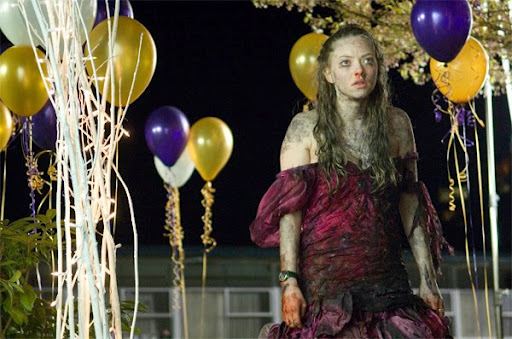
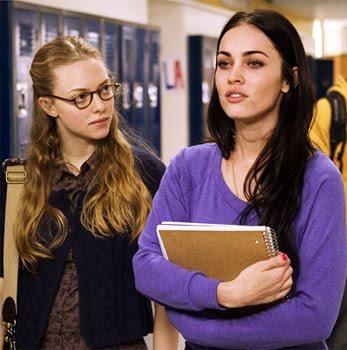
My vote for the most underrated film of 2009 might shock my readers, but please, hold your rotten tomatoes until you actually see Jennifer’s Body. Like most discriminating movie-goers, I felt the film’s ad campaign worked hard to convince me this was your run-of-the-mill sexy teenage horror romp starring Megan Fox. Let me set a few things straight. First of all, contrary to what the previews imply, there are zero scenes with nudity. Yes, Jennifer uses her charms to lure boys into her professionally-manicured grip, but the movie is much more concerned with exploring strong female characters than it is with teasing horny teenage movie-goers. After I saw the film, I wanted to beat up whoever was the film’s director of marketing. Every time I rave about this film, I have to combat the expectations set by its terrible previews.
Written by Diablo Cody (writer of Juno), this film teems with crunchy dialogue that’s funny, surprising, and smart. The writing and cinematography strike a nice balance of paying homage to classic horror films and toying with the expectations of the horror audience. Above and beyond most films in its genre, it has some unexpected plot turns, great pacing, delicious irony, and even a satisfying ending.
Another secret that the previews keep from you is that Amanda Seyfried steals the show. Sure, Megan Fox makes a great high school demon-girl, but the story really follows Seyfried’s character, Needy, and it’s her sharp narration and endearing perspective that pushes this treat into a sophisticated, delectable concoction.
With such empowering female roles, this is not a film targeting puberty-riddled boys. If anything, this is a horror film geared toward women— a rare specimen indeed. Don’t get me wrong, the gents will love it, too. But the characters, humor, and restraint in gore have a slight female-minded slant. Like in Juno, the women are strong, witty, relatable characters in a realistic high school environment. In this case, there just happens to be supernatural forces at play.
Now that I’ve let you in on this gem of a secret, it’s time to find some friends and watch this baby, pronto. You have my personal guarantee that it will surprise you, make you laugh, and leave you with feelings of anger toward certain marketing departments.
For Christmas I received a fresh special edition, 2-disc copy of Inglourious Basterds, and I have renewed my vows of love for this film. Few films can deliver like this WWII revenge story served Tarantino style. The plot, dialogue, acting, cinematography, and set design all bear the watermark of this master storyteller’s original and refreshing writing and directing. As always, Tarantino’s story wastes no time sinking its teeth deep into the audience. Mr. Tarantino knows how to build tension within scenes and from scene to scene, culminating in one of the most satisfying finales ever put to celluloid.
The audience cannot help but invest in the film’s developed and dimensional characters. I especially love how everyone speaks their own language (the Germans speak German, the French speak French, etc.) and when someone tries to speak another language it isn’t a cakewalk—there are accent anomalies and cultural differences that make it difficult. This fact alone makes the film feel more natural than a lot of WWII films. However, Tarantino’s brilliance in character development goes far beyond linguistic variation. A full chapter of the film is afforded to introduce each of the three principal characters. Each generous introduction offers a glimpse into a fully-realized world in itself, complete with the intricacies and complexities of real people—with a little Tarantino attitude and sharp wit thrown in. Tarantino’s flavorful character development results in villains that the audience hopes to see brutally punished, to the point that when certain baddies are beaten with baseball bats, having swastikas carved into their foreheads, shot until their flesh peels off, and yes, even burned alive while shot with machine guns, asphyxiated, and blown up at the same time, the violence is necessary for the film—even gratifying—instead of vulgar.
Blood and gore aside, this is a gorgeous film. The risks Tarantino takes with 30-minute long scenes, bird’s eye views through cutaway set pieces, and unconventional music choices all succeed in making the film something more meaningful to contemplate as a work of art, separate from the story and characters. You could mute the dialogue, and the images with the accompanying score would remain as something inherently beautiful and daring.
In all honesty, there is one scene I would change in the film: the one with Mike Myers playing Winston Churchill’s right hand man. It feels a little out-of-place and out of pace with the rest of the story, moving slowly and with some redundant plot explanation. I think this scene could have been edited or eliminated, but that is my one small complaint for what is otherwise a perfect film.
Hands down, I rate this film the best of the year. Nothing else comes close to touching it. Since Tarantino’s reputation precedes him, he had a lot of pressure while making this film, and he surpassed all expectations. He created the capstone WWII movie, and I think it will be quite a while before someone returns to the genre. No one can rewrite history more satisfyingly and meaningfully than Quentin Tarantino.