Archives For November 30, 1999

Okay, so this is a little late coming and it’s kind of a no-brainer (no pun intended) but if you’re not watching The Walking Dead, you’re missing out on the best zombie story ever put to screen. I love zombie movies, but The Walking Dead puts them all to shame (yes, I’m talking to you, Romero). This television experience shows you what a zombie story should be.

Not to get too gushy, but this show continually blows my mind. From the first episode, I was hooked on not only the writing and the story, but the way it’s shot. It’s one of the most cinematic shows I’ve ever seen– pure gorgeousness (amongst all the guts and gore). All along the way, there are brilliant and beautiful decisions made in the framing, juxtaposition, and angles of shots. This is the first zombie story to take itself seriously.

If you’re not particularly gripped by the cinematography, I promise you the story will grab you. It’s packed full of interesting, complex characters, dramatic irony, and writing that gives you a perpetual sense of anxiety– I feel like they will kill off whoever they please, with no respect of persons. Not to mention, the gore is pretty fun.

If you’re not able to catch it Sundays on AMC, watch it online. You’ll be sorry if you don’t. And if you didn’t hear, the show has officially just been renewed for a full 13-episode season next year. Oh yeah!

Not surprisingly, I give two thumbs up for The Social Network, which has gotten overwhelmingly positive reviews. First and foremost, Aaron Sorkin’s writing blew me away. He transformed a dialogue-heavy film into a rare treat that made me laugh and think at the same time. Aside from the writing, Jesse Eisenberg’s performance was fantastic, and I’m glad he’s been able to prove himself as something more than the poor man’s Michael Cera.

So we all agree it’s a great film, but I think it’s interesting that there’s a lot of talk about the accuracy of the film’s portrayal of Mark Zuckerberg. Certainly, I could see why this wouldn’t be Zuckerberg’s favorite film. However, I think people realize that the story is slanted for the sake of making a dialogue-heavy film exceptionally interesting. And even though Zuckerberg’s character is not particularly likable, he is still presented as a complex individual—good and bad mixed into one. The film definitely presents him as a sort of genius (even if it also presents him as a socially inept schmuck). I readily I admit that some of his comments (although definitely rude) made me feel satisfied and made me wish I were the kind of person with the guts to ask a lawyer, “Did I adequately answer your condescending question?”

The conversation at the beginning of the film serves as a summation for Zuckerberg’s character—for better or for worse. On the one hand, he’s quick, witty and has no trouble following three conversation threads at once. On the other hand, he (perhaps innocently) says some things that makes your jaw drop. And it’s this conversation that sucks you in and sets the tone for the rest of the film.

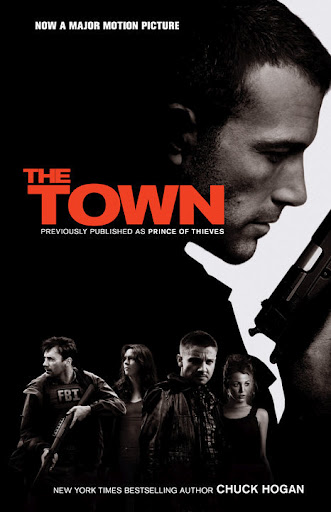
I’m gonna go ahead and jump on the bandwagon and say that you should see The Town. It’s a pretty good Boston crime film (Affleck surprised me with his ability to write) and the cinematogrpahy makes it worth seeing in theaters. It’s not jaw-dropping astounding, but it’s a good film through and through. And let’s face it: there really isn’t much else out, unless you’re planning on seeing that cartoon owl movie or that cartoon dog movie. The good news is Let Me In comes out next weekend! Eeee!

I’ve gotta say, Easy A surprised me. I fully expected to be bored to death with another teen movie’s oversimplified dramatics and cheesy one-liners. But this was a rarity in its genre: a smart film. From the beginning, Olive Penderghast (played by the likable Emma Stone) is much more interesting than most teens portrayed in films. She’s smart, seriously witty, and she pokes fun at herself (and at the movie itself in a strange meta-narrative that surprised me with its sophistication). As a bonus, the plot took some turns that I didn’t see coming, which is a rare luxury indeed in a teen comedy, and the journey brings you to a pretty meaningful place in the end. I didn’t feel hit over the head with sentimentality, but I appreciated the film’s final message.

The last complimentary thing I’ll say about this film (I don’t want to sound too much like I’m gushing here) is that I really liked the relationship between Olive and her parents (played by Patricia Clarkson and Stanley Tucci). These parents weren’t written as typical teen-movie parents. They were full-fledged characters in themselves, and they treated Olive as they would an intelligent adult. You could also see where Olive got her intelligence and spunk, as her parents had some of the best lines in the film.

When all’s said and done, this is still a teen comedy. It has its problems, just like any film in its genre, but I think it’s above and beyond most of its competitors. The film has a lot more meat to it than the trailers imply, and it’s definitely at least worth a rent.

The Art of the Steal was the most engaging documentary I’ve seen in a long time. It’s about the Barnes Foundation, which houses the most priceless art collection in the United States. When Dr. Albert Barnes died, he left specific instructions in his will for how the art should be displayed and protected, but many people and organizations had other ideas for his collection.
Like any good documentary, this film had me angry and up in arms by the end. As a warning: it’s definitely a slanted telling of the story, but it’s a slant I happen to agree with. With its simple premise, this film explores complex themes of the meaning of art, how art should be displayed, principles of private ownership, and moral obligations as a society. It’s definitely worth a rent. I dare you to not feel passionately about the Barnes Foundation by the end of it.

You can say a lot of things about Scott Pilgrim vs the World, but you can’t say it isn’t fun. This film was unlike anything I’ve seen, straddling realms of video games and comic books, with bits of reality thrown in. Video game icons and comic book expletives garnished the screen, which was weird, to say the least. But I think it worked for the feel of the film, and every once in a while they were used in a clever way.

 
There were lots of good moments where the film’s cleverness surprised me. The character banter had more wit than anything I’ve seen in a while. Having said that, there were a few things that bugged me a lot: one of the exes breaks into song (ugh), Pilgrim waits by the door right after making an Amazon purchase, and there are a few parts where swear words are bleeped out. I thought all these elements pushed things too far, and because they weren’t funny, they didn’t carry enough weight to support themselves. There were also times when the film felt like it was a person trying really hard to be cool.

Despite its faults, this film left me with overwhelming fuzzy feelings of geekiness (it might have been the old-school Sega and Nintendo sounds scattered throughout). In the end, I liked the way it was written, and I thought it was much funnier than the “comedies” that have plagued theaters recently (Dinner for Schmucks, The Other Guys).

I definitely recommend seeing this in theater, especially because there isn’t anything else coming out until the end of October (Let Me In). It’s a sad year, folks. Better get your ya ya’s out while you can.

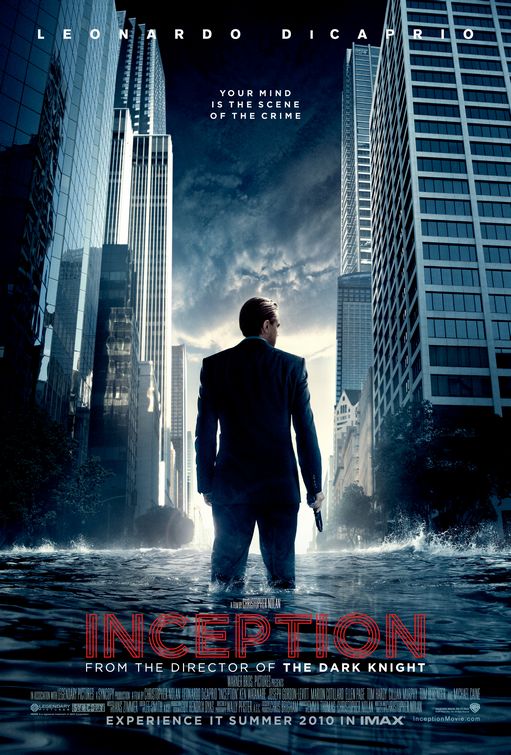
Inception was delicious eye candy. I’m not ashamed to say it, and I’m not ashamed I liked it. But I don’t intend to watch it again, unlike many others who have seen the film. The story was interesting, the writing was good, and the acting was par. But it was the visual aspect that grabbed me—I’m glad I saw it in IMAX.

I’m gonna cut to the chase—the visuals had me drooling the entire time. It wasn’t too over-the-top or incohesive (like a Terry Gilliam mess) and it wasn’t what the layman labels “creative” (like M. Night Shyamalan or Tim Burton). It was actually different and interesting.

Between the beautiful shots of people fighting while floating and cities folding into themselves, there were certain inconsistencies within this world that did not make sense to me. But that goes with the territory when you see a film like this, and it’s almost unavoidable. You just have to set all your logic on the shelf before the film begins. Luckily, the story and the visuals will soothe your logic-less brain. And after walking away, don’t bother wasting time pondering the film’s contradictions or lapses in logic.

I recommend a one-time must-see. It’s the film everyone’s talking about, and you’ll be shunned from social circles and awkwardly ostracized at parties if you don’t see it. But you don’t have to succumb to peer pressure and pretend you’re going to see it twice.

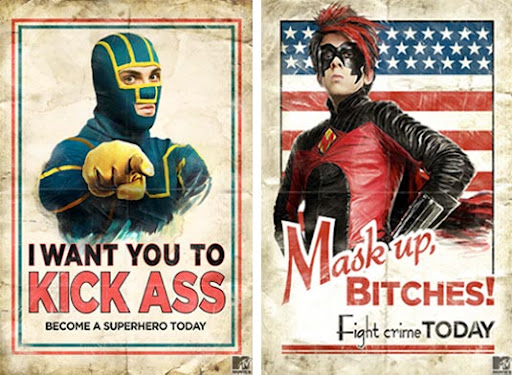
Kick-Ass is not your mom’s superhero movie. It’s better.
Based on the comic book by Mark Millar and John Romita Jr., this film is about a kid who decides to dress up like a superhero, fight evils of the world, and get his ass kicked. From the beginning it teems with dialogue to make you chuckle. By the end, you can’t suppress long-winded laughter.
 
Our main hero, affectionately called Kick-Ass, is played by Aaron Johnson— an actor made tabloid-famous for knocking up the director of his to-be-released follow-up film. But he owns Kick-Ass. Playing the geeky awkward kid, it would’ve been easy for him to slip into faux Michael Cera mode, but he doesn’t. He makes the character his own, and he’s relatable and likable.
 
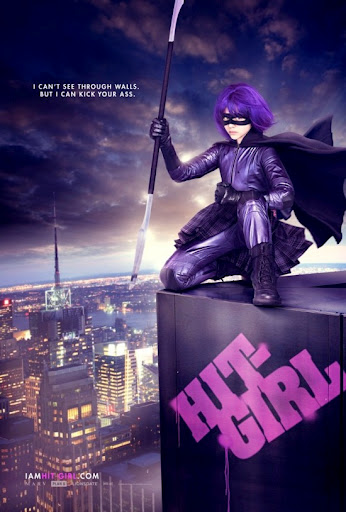
As much as I love the title hero, the show-stealer is Hit Girl, played by my official favorite little actress: Chloë Moretz. Previously, she stole scenes in 500 Days of Summer. In Kick-Ass, this girl delivers her lines with such dry wit, you can’t help but adore her. Plus she’s the character who really does kick ass. As she swore like a sailor and brutally killed villains, my friend sitting next to me said, “Awww. She’s so cute.” Now that’s talent.
 

Putting aside the awesome actors, there’s only one word to describe the plot: fun.

 
At one point, the plot takes a turn that’s a little too over-the-top for my taste, but it’s a detail near the end that doesn’t hurt the film much.
 
Catch Kick-Ass in theaters with friends. It’s a blast.


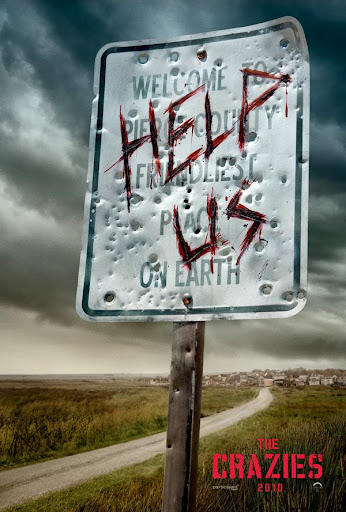
Before you see this film, the less you know about the plot, the better. I sat down in the theater armed only with the expectation that I would see crazy people, and I walked away from the experience pleased with the structure, pacing, and style in which the film unveiled the plot. So I’m trying to refrain from spoiling anything, in hopes that you’ll see this better-than-expected refreshment.

The Crazies is a remake of George A. Romero’s forgotten 1973 film by the same name. (I’ve never seen the original. In fact, I’d never heard of the original until recently, but George A. Romero’s Dawn of the Dead is one of my most cherished DVDs.) I sensed some of George A. Romero’s playfulness shining through in The Crazies, but for the most part, the film took itself pretty seriously. Sure, this film fulfills a lot of stereotypes (the far-fetched scenarios, some predictable deaths, the hopeless romantics), but it is also much more sophisticated than most films in its genre.

From the very first scene, I was hooked by the storytelling. Not only did the film waste no time establishing tension, but from the beginning the characters were fleshed out and more multi-dimensional than most horror representations. As the plot progressed, the storytelling only became more refined—clean, intelligent, satisfying. When I wished for a character to do something smart, it was like they heard my thoughts and took heed.

Aside from the writing, this film was shot as a masterpiece in tension-building. My favorite scene starts with people talking in a dark room where they have no escape. Pretty typical horror stuff, right? But the scene sets itself apart as something special when the characters start to hear a peculiar noise—an unsettling scratching of metal. Instead of jumping to the action, the scene allowed just the right amount of time for the audience to sit in the dark and hear the metallic noise come closer and closer, finally culminating in something much more disturbing and awesome than I could have imagined while waiting in the dark. I was on the edge of my seat for the entire movie.

With most true-blue horror movies, I don’t recommend them to people unless they’re actually into horror for its own sake. But this film pushes the plot and writing into the realm of “good,” where most horror films fear to tread. So, fear not.


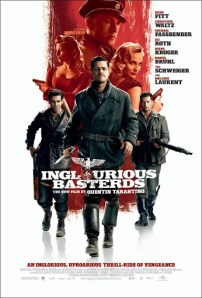
For Christmas I received a fresh special edition, 2-disc copy of Inglourious Basterds, and I have renewed my vows of love for this film. Few films can deliver like this WWII revenge story served Tarantino style. The plot, dialogue, acting, cinematography, and set design all bear the watermark of this master storyteller’s original and refreshing writing and directing. As always, Tarantino’s story wastes no time sinking its teeth deep into the audience. Mr. Tarantino knows how to build tension within scenes and from scene to scene, culminating in one of the most satisfying finales ever put to celluloid.

The audience cannot help but invest in the film’s developed and dimensional characters. I especially love how everyone speaks their own language (the Germans speak German, the French speak French, etc.) and when someone tries to speak another language it isn’t a cakewalk—there are accent anomalies and cultural differences that make it difficult. This fact alone makes the film feel more natural than a lot of WWII films. However, Tarantino’s brilliance in character development goes far beyond linguistic variation. A full chapter of the film is afforded to introduce each of the three principal characters. Each generous introduction offers a glimpse into a fully-realized world in itself, complete with the intricacies and complexities of real people—with a little Tarantino attitude and sharp wit thrown in. Tarantino’s flavorful character development results in villains that the audience hopes to see brutally punished, to the point that when certain baddies are beaten with baseball bats, having swastikas carved into their foreheads, shot until their flesh peels off, and yes, even burned alive while shot with machine guns, asphyxiated, and blown up at the same time, the violence is necessary for the film—even gratifying—instead of vulgar.

Blood and gore aside, this is a gorgeous film. The risks Tarantino takes with 30-minute long scenes, bird’s eye views through cutaway set pieces, and unconventional music choices all succeed in making the film something more meaningful to contemplate as a work of art, separate from the story and characters. You could mute the dialogue, and the images with the accompanying score would remain as something inherently beautiful and daring.

In all honesty, there is one scene I would change in the film: the one with Mike Myers playing Winston Churchill’s right hand man. It feels a little out-of-place and out of pace with the rest of the story, moving slowly and with some redundant plot explanation. I think this scene could have been edited or eliminated, but that is my one small complaint for what is otherwise a perfect film.

Hands down, I rate this film the best of the year. Nothing else comes close to touching it. Since Tarantino’s reputation precedes him, he had a lot of pressure while making this film, and he surpassed all expectations. He created the capstone WWII movie, and I think it will be quite a while before someone returns to the genre. No one can rewrite history more satisfyingly and meaningfully than Quentin Tarantino.